In short
- Wet season (June to November) offers full pools and flooded reservoirs.
- Dry season means a dry reservoir, reducing the island effect.
- September to November is peak for photography and high water.
In this article
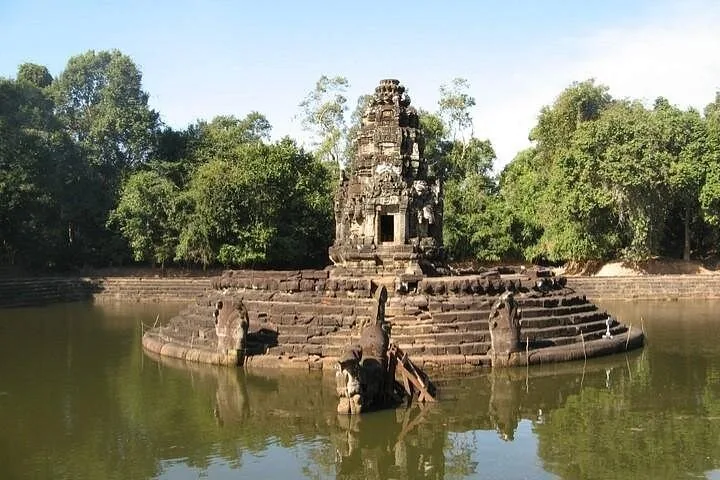
Neak Pean was designed as a water temple. Because of this, the time of year you visit greatly affects what you see. During the dry months, the surrounding Jayatataka Baray and the temple's central pools dry up. In the wet season, the water returns, restoring the site's original design.
Why is the wet season better for Neak Pean?
The wet season fills the central pool and the surrounding reservoir, restoring the temple's island appearance.
Between June and November, the rains fill the Jayatataka Baray. This transforms the dry land into a lush marsh and reflective lake. The 70-meter (230-foot) central pool also fills with water. This allows you to see the site as King Jayavarman VII intended in the late 12th century.
| Season | Months | Water Levels |
|---|---|---|
| Wet Season | June to November | High; flooded reservoir and pools |
| Dry Season | December to May | Low to dry; empty reservoir |
What are the best months for photos at Neak Pean?
September to November are the best months for photography.
During these late wet-season months, the water levels in the baray peak. The flooded marshland creates strong reflections of the wooden causeway and the skeletal submerged trees. This setting offers excellent conditions for photography.
What does Neak Pean look like in the dry season?
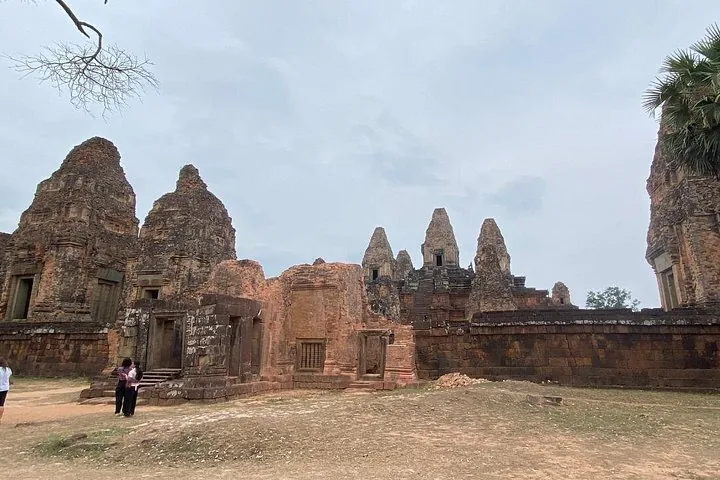
The surrounding reservoir and the temple pools largely dry out.
Without rain, the massive ancient reservoir turns into a dry field. The four peripheral ponds and the 70-meter central pool also lose their water. You can still see the central sanctuary and the stone nagas, but the island illusion is lost.
How does the season affect the wooden causeway?
The causeway crosses water in the wet season and dry land in the hot season.
Visitors walk across a long, unshaded wooden boardwalk to reach the temple. It takes about 10 minutes to cross. In the wet season, you walk directly over the flooded baray. In the dry months, you walk over dirt and marsh grass. The bridge offers no shade in either season.
What should you pack for Neak Pean in the wet season?
Bring a rain jacket, insect repellent, and sun protection.
- Rain gear: A lightweight rain jacket or poncho is essential for sudden downpours.
- Insect repellent: The flooded marshland and standing water attract mosquitoes.
- Sun protection: A wide-brimmed hat, sunglasses, and high SPF sunscreen are required for the unshaded boardwalk.
What time of day is best to visit?
Visit early morning or late afternoon to avoid midday heat.
Neak Pean is open daily from 7:30 AM to 5:30 PM. The boardwalk lacks shade entirely. Visiting early or late helps you avoid intense Cambodian sun. Allow about 45 minutes to complete the walk and view the temple.
Questions travellers ask
Do you need a separate ticket for Neak Pean?
No. Entry is included in the standard Angkor Pass. A 1-day pass costs $37 in 2026. You purchase this pass from Angkor Enterprise.
Is Neak Pean on the small or grand circuit?
Neak Pean is located on the Grand Circuit of the Angkor Archaeological Park. You can hire a tuk-tuk driver from Siem Reap for $19 to $25 per day to tour this route.
What do the pools at Neak Pean represent?
The large central pool represents the mythical Himalayan Lake Anavatapta. The four smaller peripheral ponds symbolize the cosmological elements: Water, Earth, Fire, and Wind.