In short
- Built as a spiritual hospital in the late 12th century.
- Designed around water purification and elemental balance.
- Represents the mythical Himalayan Lake Anavatapta.
In this article
King Jayavarman VII ordered the construction of Neak Pean in the late 12th century. Rather than a standard place of worship, it served a specific medical and spiritual purpose. Pilgrims traveled to this man-made island to balance their elements and cure their illnesses through sacred water rituals.
Who built Neak Pean?
King Jayavarman VII built Neak Pean in the late 12th century.
Jayavarman VII commissioned Neak Pean during a massive campaign of public works. The king intended the site to serve his people as a spiritual hospital. It sits on a man-made circular island in the center of the Jayatataka Baray.
How did the ancient hospital work?
Pilgrims believed they could cure diseases by bathing in the temple's interconnected pools.
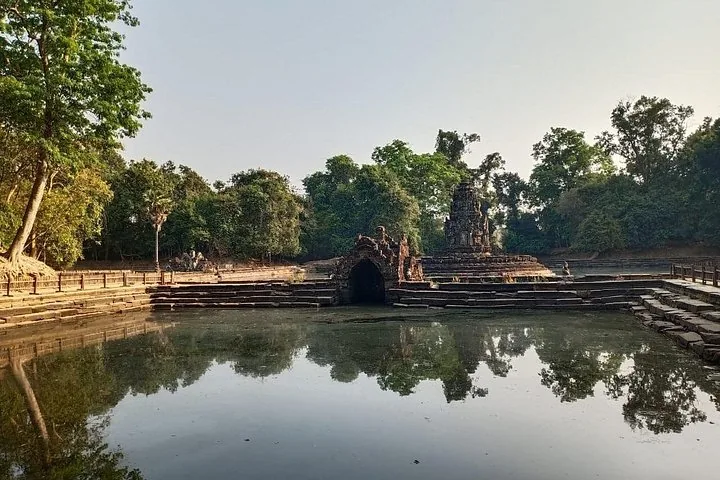
Ancient healing rituals relied on balancing the body's cosmological elements. Neak Pean features a central pool and four smaller peripheral basins. Water flowed from the center into these smaller basins through four ornamental stone gargoyles. Patients bathed in specific pools to restore their balance of Water, Earth, Fire, or Wind.
What does the central pool represent?
The 70-meter square central pool represents Lake Anavatapta, a mythical lake in the Himalayas.
In Buddhist cosmology, Lake Anavatapta is a sacred body of water known for its healing properties. The temple recreates this myth on a massive scale. The central sanctuary rests on a 7-tiered circular laterite base measuring 14 meters in diameter.
| Temple Feature | Symbolic Meaning |
|---|---|
| Central Pool | Mythical Himalayan Lake Anavatapta |
| Four Peripheral Ponds | Water, Earth, Fire, and Wind |
| Balaha Statue | Bodhisattva Lokeshvara rescuing merchants |
What is the Balaha horse statue?
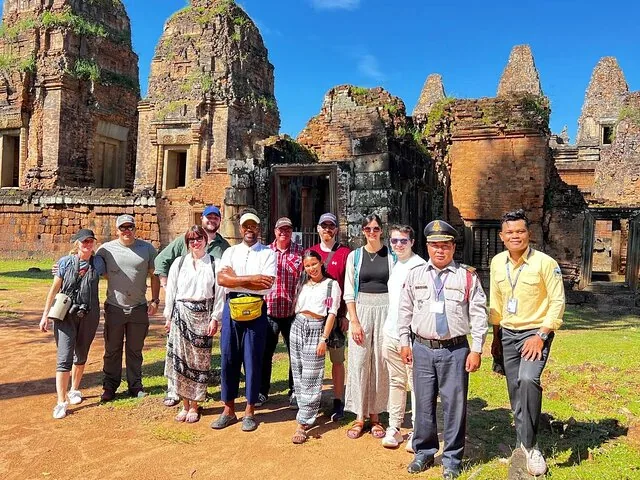
The Balaha statue depicts a mythical flying horse rescuing drowning merchants from the water.
This prominent stone sculpture sits in the central pond. It seemingly swims toward the eastern edge of the central island. The horse is believed to be a form of the compassionate Bodhisattva Lokeshvara. It reinforces the temple's theme of salvation and healing.
What does the name Neak Pean mean?
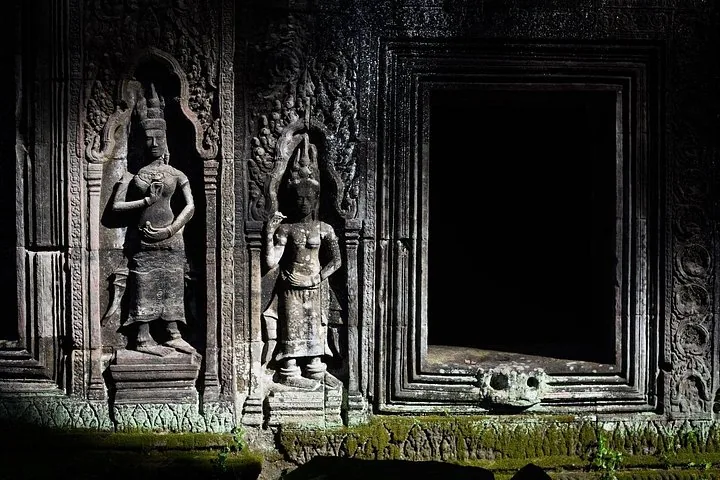
Neak Pean translates to "The Entwined Serpents" in the Khmer language.
The name comes from the architectural design of the central shrine's base. Two large stone nagas, named Nanda and Upananda, encircle the bottom of the central island. Their intertwined tails form the defining feature that gives the temple its modern name.
Is Neak Pean part of the Grand Circuit?
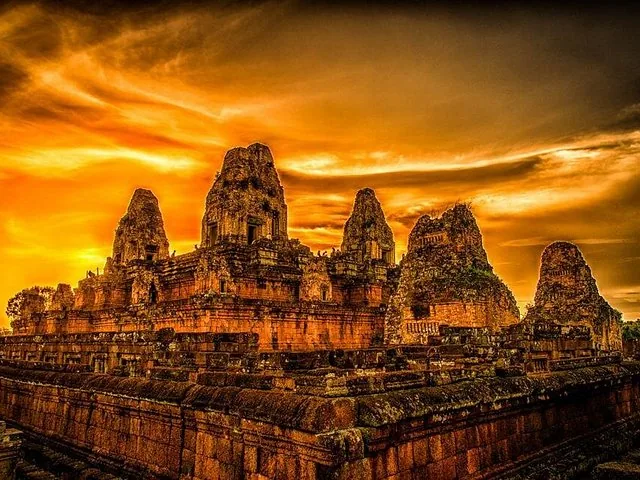
Yes, Neak Pean is a standard stop on the Angkor Grand Circuit tour route.
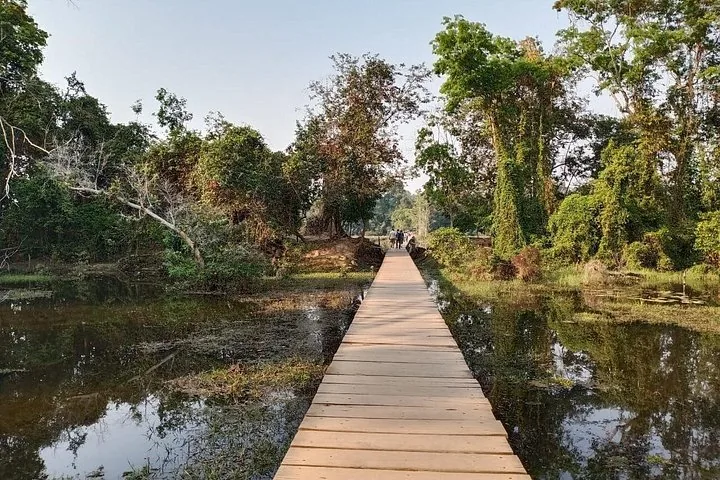
Most visitors explore the ancient hospital while driving the wider loop of temples. It takes about 45 minutes to reach the site from Siem Reap by tuk-tuk. You must walk across a long wooden boardwalk over the surrounding reservoir to access the island.
Questions travellers ask
Do you need a separate ticket for Neak Pean?
No, access is included in the standard Angkor Pass. A 1-day ticket costs $37 in 2026. You must purchase this pass from Angkor Enterprise before visiting.
Can you go inside Neak Pean?
Visitors cannot step onto the central island sanctuary or enter the central shrine. You must view and photograph the ruins from the surrounding perimeter platforms.
What are the four animal statues at Neak Pean?
The temple features four stone gargoyle spouts shaped like an elephant, a horse, a lion, and a human head. These originally channeled water from the central pool into the peripheral ponds.